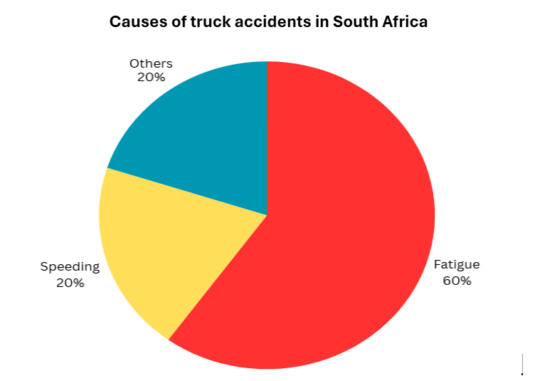
Did you know that fatigue is estimated to contribute to as much as 60% of truck crashes in South Africa?
 As a truck owner or transport company operator, one major accident can wipe out profits through repairs, legal claims, downtime, and skyrocketing insurance premiums. Yet many of these incidents are preventable – simply by encouraging drivers to stop and rest properly at dedicated truckstops.
Understanding What Causes Fatigue
Driver fatigue doesn’t happen overnight; it’s the result of accumulated factors common in long-haul trucking across South Africa’s vast roads, from the N1 to the N3 corridors.
Key causes include:
- Extended driving hours: Many drivers exceed legal limits to meet deadlines, often working over 90 hours a week while getting less than 5 hours of sleep per night.
- Poor sleep quality: Sleeping in truck berths interrupted by noise, vibration, or security concerns leads to fragmented rest.
- Irregular schedules: Unpredictable routes and tight delivery times disrupt natural sleep cycles.
- Health and lifestyle factors: Issues like obesity, sleep apnea (common among truckers), poor diet, and lack of exercise compound tiredness.
- Monotonous roads: Long stretches of highway reduce alertness, leading to microsleeps.
In South Africa, these factors are exacerbated by reliance on road freight due to rail challenges, putting immense pressure on drivers.
What Services Do Truckstops Provide?
Truckstops are more than fuel stations – they’re essential havens designed for professional drivers. Facilities like Lion Park, Reef Truck Stop, Bukhulu, and Kempston Truck Stops offer services that directly combat fatigue.
Typical offerings include:
- Secure parking: 24-hour guarded areas to protect trucks and cargo, allowing worry-free overnight rest.
- Clean ablutions and showers: Rejuvenating facilities for proper hygiene and relaxation.
- Nutritious meals: On-site canteens with balanced food options, far better than skipping meals or relying on junk food.
- Repair and maintenance services: Quick fixes to prevent breakdowns that force extended driving.
- Additional amenities: Shops for essentials, recreational areas, and sometimes wellness clinics for health checks.
By providing a safe, comfortable environment for proper rest, truckstops enable drivers to recharge fully, reducing the risk of fatigue-related errors.
How Can Fatigue Cause Accidents?
Fatigue impairs drivers in ways similar to alcohol intoxication: slowed reaction times, poor judgment, lapses in attention, and even falling asleep at the wheel.
In trucking, this leads to:
- Run-off-road crashes: Drifting out of lanes due to microsleeps.
- Rear-end collisions: Failing to notice slowing traffic.
- Head-on or rollover incidents: Overcorrection from reduced awareness.
South African studies show 62% of long-haul drivers have nodded off while driving, and fatigue plays a role in up to 60% of truck crashes. These accidents are often severe, involving heavy vehicles on high-speed routes.
How Can Insurance Cover Help You Cover Accidents?
Comprehensive truck insurance is vital in South Africa, covering repairs, third-party claims, cargo loss, and liability. With high accident rates – trucks involved in disproportionate fatalities – premiums can be punishing after claims.
However, insurers reward low-risk fleets:
- Fewer accidents mean fewer claims, stabilizing or reducing premiums.
- Many providers offer discounts for proven safety measures, like fatigue management policies.
- Good records can qualify for “no-claim bonuses” or lower excess fees.
Preventing fatigue-related incidents through truckstop use directly translates to insurance savings, protecting your bottom line.
What Can You Implement Into Your Fleet to Prevent or Reduce Fatigue Amongst Drivers?
As a fleet owner, proactive steps can drastically cut fatigue risks and associated costs.
Practical implementations:
- Enforce rest policies: Mandate stops at reputable truckstops for mandatory breaks and overnight rests.
- Schedule realistically: Build in buffer time for rest, avoiding pressure to skip breaks.
- Driver training: Educate on fatigue signs (yawning, heavy eyelids) and management techniques.
- Health programs: Screen for sleep disorders and promote exercise, healthy eating, and regular meals.
- Technology aids: Use telematics for monitoring hours, fatigue alerts, or dash cams to encourage safe habits.
- Partner with truckstops: Negotiate fleet deals for priority access to facilities.
Bullet-point tips for drivers to share:
- Get 7-9 hours of quality sleep daily.
- Take regular breaks every 2-3 hours.
- Eat balanced meals and stay hydrated.
- Avoid heavy lunches that cause drowsiness.
- Use truckstop amenities fully – shower, stretch, and relax.
Who Is Held Accountable When an Accident Is Caused by Fatigue?
In South Africa, accountability falls on multiple parties:
- The driver: For violating hours-of-service rules or driving while impaired by fatigue.
- The company: Often vicariously liable if poor scheduling, pressure, or inadequate policies contributed.
- Owners/operators: May face criminal charges in severe cases, plus civil claims from victims via the Road Accident Fund or direct suits.
Companies with strong fatigue prevention records fare better in investigations and insurance assessments, avoiding fines and reputational damage.
Final Thoughts: How the Prevention of Fatigue Can Prevent Accidents
Investing in fatigue prevention – starting with regular truckstop use – isn’t just about safety; it’s a smart business decision. By reducing accidents, you’ll cut repair bills, legal fees, downtime, and insurance hikes, potentially saving thousands per incident. Prioritise your drivers’ well-being, partner with quality truckstops, and build a culture of rest. Safer roads mean a stronger, more profitable fleet. Your company – and South Africa’s highways – will thank you.